
Domaine La Rosière is a group estate in Diemeringen, Alsace. The same house also appears online under a second name, Maison AVIV. Two public source records describe one property. The AchMedia record merges them without inventing a third, and without publishing anything the sources cannot support.
AchMedia produces the films and routes the enquiries. Bookings and payments happen with the owner. This article publishes no price, no rating, no review and no availability. It describes a method, checkable in the repository and in the source dossier dated 17 July 2026. Every claim below points back to a source named in the text.
It extends the property video guide. The angle is documentary: how to present a place whose exact address stays private. The reader owns or manages a large house with several uses. The question is always the same. What can be stated, and from which source?
One property, two public source records
The estate has two public origins. A short-stay listing on one side, the owner's official website on the other. Both describe the same house, in the same commune, with the same maximum capacity. The source dossier records the merge, its evidence and the gaps that remain between the two pages.
Building two records from two web addresses adds an imaginary property to the catalogue. The visitor then compares a place with itself, and trusts neither version. The rule fits on one line: one real property, one public record. Both origins stay cited, with their check date and their role. A documented merge is safer than a silent duplicate.
Treat the alias as a name, not a second listing
Maison AVIV is an alias of Domaine La Rosière. It comes from the domain name of the official website. An alias helps a reader find the place again. It does not justify a second catalogue entry, so it belongs in a dedicated field beside the canonical name. A search engine can then read both names as one place.
This has a practical effect on search. A visitor may remember only one of the two names. The page has to answer both without creating a competing address. The canonical name stays Domaine La Rosière. The alias stays readable in the text, never hidden inside a tag.
What “up to 50 people” states, and what it does not
The recorded capacity is fifty people at most. That number is a verified ceiling, not the configuration of every stay. It is published with its condition, in the same sentence: on request only, and after direct confirmation by the owner. Separating the figure from its condition is enough to create a false promise.
A ceiling is not a minimum. It describes neither the number of beds, nor the number of places at table, nor any room-by-room split. An honest page writes the ceiling, writes the condition, then stops. The rest belongs to the conversation with the owner, who knows the house and its current constraints.
Keep “on request” beside every claim
“On request” loses its value when it sits alone at the foot of the page. The visitor reads the title, the capacity and the uses first. Finding no condition there, they infer availability. So the phrase has to travel with each claim, including in the excerpts shared on social platforms. An excerpt stripped of its condition becomes a promise on the first share.
Three practical statements frame the estate record. The exact address is shared after qualification. Availability is confirmed on request only. Commercial terms are confirmed before any commitment. Those three sentences are worth more than a decorative banner, because they answer a question the visitor already has.
Publish a place whose exact address stays private
The public location stops at Diemeringen, Alsace. That level of detail is enough to situate a project and to judge the journey. It protects the occupancy of the house and the quiet of its neighbours. It also prevents the unannounced visits that always end up happening.
The rule changes how the page is written. Name a commune and a region, never a street or a number. Publish no access plan, no exact coordinates and no map crop centred on the gate. The address goes out after qualification, once the project is real and the contact known.
Film the estate without giving away its position
A film says more than a photograph. A street plate, a village sign, a church tower or a letterbox is enough to locate a house. So the recce has to produce a list before the shoot. Three columns are enough: what can be framed, what stays out of frame, what gets handled in the edit.
Aerial footage raises the question most directly. It places a building and its surroundings in one second. The French drone framework applies to the real site, under the responsibility of the qualified operator. A wide shot can often be replaced by a tighter one, without losing the information the project needs.
Name the confirmed facilities and leave the rest blank
Five facilities are confirmed: an indoor pool, a tennis court, a fitted kitchen, Wi-Fi and on-site parking. That list is not a full inventory. It is the part that two public sources allow us to state without reservation. Anything added needs written confirmation from the owner before publication. An indoor pool changes how an off-season stay reads. It is confirmed, so it is written.
The source dossier keeps the values that contradict each other from one page to the next. None of them is settled by a writer, or rounded to look tidy. A conflicting field stays empty until it is confirmed. An empty field takes a minute to fix; an invented one costs a wasted visit.
Give each of the four uses its own answer
The estate takes four families of project: group stays, seminars and retreats, private events, productions and shoots. These uses share neither the same rhythm, nor the same questions, nor the same contacts. Merging them into a single promise blurs the enquiry and lengthens the exchange. Four entry points beat one form that treats every project the same.
A seminar raises questions about timings, connectivity and how the spaces are arranged. A shoot raises questions about access, noise and image rights. A film can show those uses one after another. The page has to say which one is being read, before the form rather than after it.
Place it in the Vosges du Nord without pinning the map
The gardens and the setting in the Vosges du Nord belong in the record. They describe surroundings, not a plot. A named massif gives a reader who does not know the region something to hold on to. It replaces neither a land registry plan nor a property boundary.
The Alsace property market guide provides the regional figures. It establishes nothing about this estate in particular. The two levels stay separate in the text. A regional figure never becomes a feature of a house, and a feature never becomes a market average.
Keep the producer's role apart from the owner's
AchMedia produces the images and passes on qualified enquiries. The owner confirms availability, terms and price. That boundary is not a legal formality. It stops a film being read as a confirmed booking, and stops a journal page being mistaken for a reservation engine. A film documents a house; it commits to neither a date nor a price.
The public property page, in French remains an enquiry page. Nothing there can be booked or paid for. Our Parcelle page explains how an enquiry is qualified and then sent to the owner. The cost guide covers the separate question of commissioning a film.
Illustrate without borrowing another property's picture
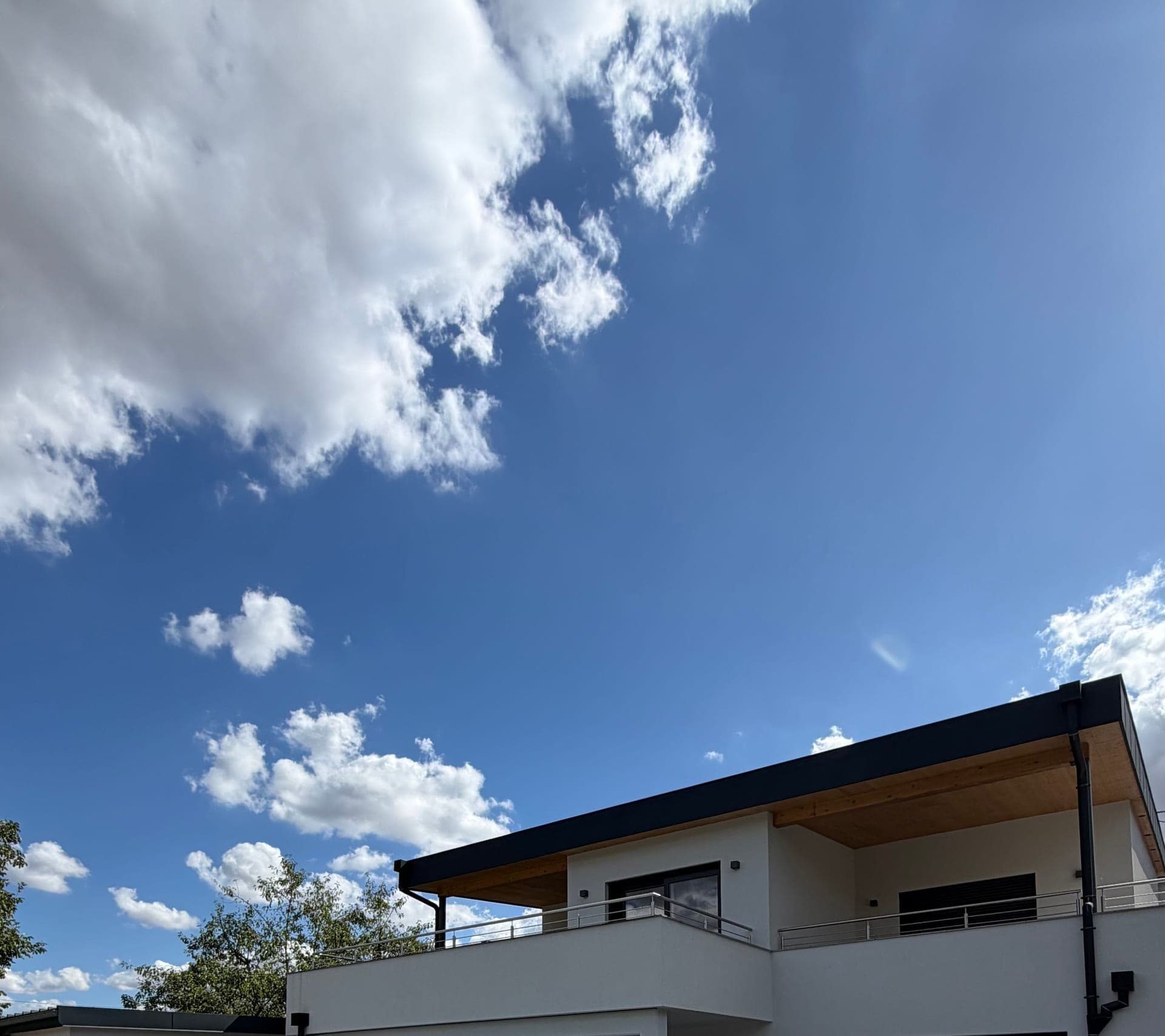
This article is illustrated with an AchMedia shoot in Dettwiller, Alsace. It is not Domaine La Rosière, and the caption says so in plain words. The approved images of the estate stay attached to its own record. Their permission covers that channel, not the journal.
The principle holds for any place page. A striking image with the wrong attribution creates a false promise before the first click. Production files stay tied to the shoot they came from, in the media register. An archive item with no confirmed link never fills the gallery of another property. The name of the shoot follows the file, from the rushes to the thumbnail.
Reuse the method for your own house
Start by listing your public source records. A listing, a website and a social profile can describe the same place with different values. Write those gaps down instead of erasing them. The Saint-Paul-de-Vence case applies the same discipline to a named villa.
Then decide what stays private, and say so on the page itself. Finally, prepare the shoot with that list in hand. Our property video service sets out the questions to settle with the owner. An honest page is recognised by what it refuses to claim. That restraint shows, and it reassures more than a rounded promise.
| Published fact | What it establishes | Limit |
|---|---|---|
| Diemeringen, Alsace | The commune of the estate | Not the exact address |
| Up to 50 people | A verified ceiling | Not the capacity of every stay |
| Indoor pool, tennis court | Confirmed facilities | Not a full inventory |
| Four listed uses | The families of project accepted | Not availability |
| Alias Maison AVIV | A second public name | Not a second property |
Source: Approved publication snapshot in the repository, repo:achmedia-web/src/lib/parcelle/verified-publication-fallback.ts, and the owner's official website; checked on 17 July 2026.
Frequently asked questions
Can Domaine La Rosière be booked on this site?
No. The public record passes a qualified enquiry to the owner. The booking and the payment happen with them. AchMedia produces the films and routes the enquiries, without confirming a date on the owner's behalf.
Why is the exact address not published?
It is shared after qualification. The public location stops at Diemeringen, Alsace. That level of detail situates a project while protecting the occupancy of the house and the quiet of its neighbours.
What does “up to 50 people” mean?
It is a verified ceiling, valid on request only and after direct confirmation. It is neither a minimum nor the configuration of every stay. The owner confirms the arrangement that fits the project.
Is Maison AVIV a different property?
No. It is an alias of Domaine La Rosière, taken from the domain name of the official website. A short-stay listing and that website describe one house. The source dossier keeps both origins.
Do the images in this article show the estate?
No. They come from an AchMedia shoot in Dettwiller, Alsace, and the caption says so. The repository links no AchMedia media to Domaine La Rosière.